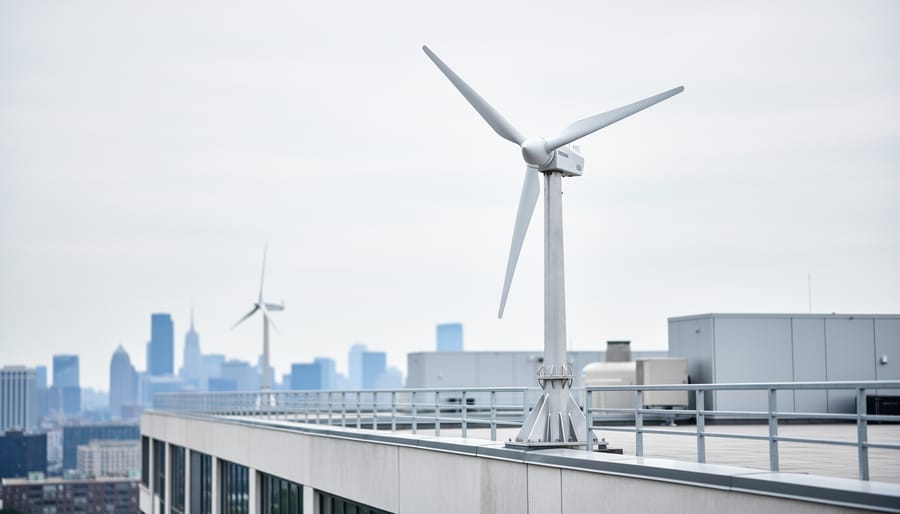
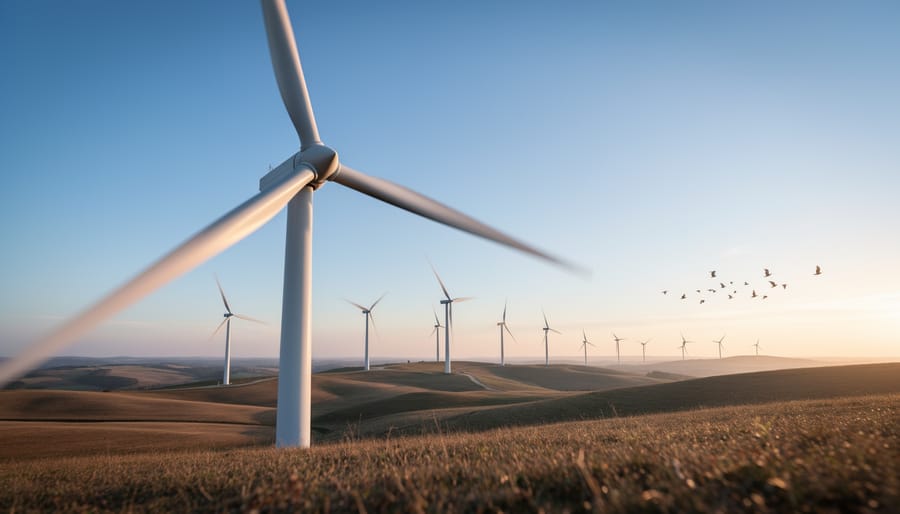
Wind energy’s environmental impact encompasses both significant climate benefits and localized challenges for wildlife, primarily involving bird and bat collisions with turbine blades and habitat disruption near wind farms. As one of the fastest-growing renewable energy sources worldwide, wind power has prevented millions of tons of carbon emissions annually, yet it simultaneously poses measurable risks to flying animals, particularly raptors and migratory species that share the airspace with spinning turbines.
This tension between climate action and wildlife conservation has sparked crucial conversations among environmental scientists, energy developers, and conservation organizations throughout the 2020s. The question isn’t whether wind energy affects ecosystems, it does, but rather how those impacts compare to fossil fuel alternatives and what practical solutions exist to minimize harm while scaling renewable capacity.
Understanding wind energy’s environmental footprint requires looking beyond simple binary choices. Fossil fuel extraction and combustion destroy habitats through mining operations, oil spills, and climate-driven ecosystem collapse on a far larger scale than wind installations. Yet acknowledging this context doesn’t dismiss legitimate concerns about individual wind projects affecting endangered bat populations or critical bird migration corridors.
This article examines the specific mechanisms through which wind turbines interact with wildlife, quantifies the scale of impacts based on current research, and explores proven mitigation strategies already reducing animal fatalities at wind facilities. From radar-based shutdown systems to strategic turbine placement informed by migration patterns, the renewable energy industry has developed tangible approaches that allow wind power expansion while protecting vulnerable species. The goal is equipping readers with accurate information to evaluate wind energy projects in their regions and understand how thoughtful planning makes wind power both a climate solution and a manageable conservation challenge.
What Environmental Impact Means in Wind Energy Context
When we talk about environmental impact in the wind energy context, we’re examining how turbines and wind farms alter the physical landscape and affect the plants, animals, and ecological processes within and around project sites. Unlike pollution from fossil fuels that spreads globally, wind energy’s environmental footprint concentrates locally where turbines stand, creating measurable changes to wildlife behavior, habitat use, and mortality rates.
Understanding these impacts requires distinguishing between what happens immediately at turbine locations versus broader ecosystem-level changes that ripple outward:
- Direct Impact
- Physical harm to wildlife through collisions with turbine blades or towers, resulting in immediate injury or death to individual animals.
- Indirect Impact
- Changes to wildlife behavior, reproductive success, or habitat quality caused by turbine presence, noise, or human activity, affecting populations over time without direct physical contact.
- Habitat Fragmentation
- The division of continuous wildlife habitat into smaller, isolated patches due to turbine infrastructure, access roads, and transmission lines, which can limit species movement and gene flow.
- Cumulative Effects
- The combined environmental consequences from multiple wind projects across a region, which may exceed the sum of individual project impacts on migratory corridors or sensitive ecosystems.
Wildlife considerations matter for sustainable development because they determine whether we’re solving one environmental crisis while creating another. A wind farm that decimates a local raptor population or blocks crucial migration routes undermines the climate benefits we’re trying to achieve. Proper impact assessment means weighing short-term construction disturbance against long-term habitat changes, measuring both species lost to collisions and populations displaced from traditional territories.
The scope extends beyond counting dead birds. Scientists evaluate breeding success in nearby colonies, track changes in species diversity, monitor behavioral shifts like altered flight patterns, and assess whether displaced animals find suitable alternative habitat or face increased competition elsewhere.
How Wind Energy Affects Local Wildlife
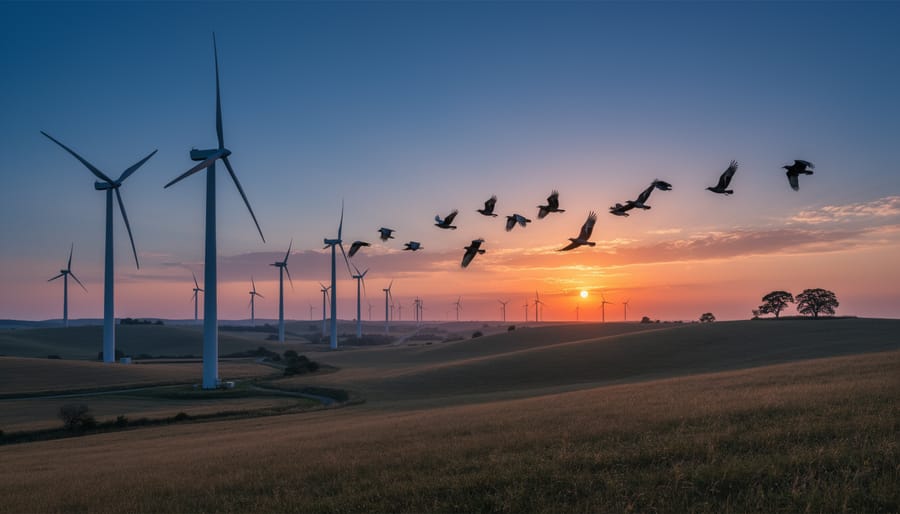
Collision Dynamics with Turbine Blades
Birds and bats collide with turbine blades because the structures occupy airspace where these animals naturally fly, and the spinning rotors create hazards that wildlife hasn’t evolved to detect or avoid. Despite appearing to rotate slowly from the ground, blade tips often travel at speeds exceeding 150 miles per hour, faster than most birds can react when they suddenly perceive danger.
Visibility plays a critical role. Birds rely on motion detection to spot predators and obstacles, but the repetitive, predictable rotation of turbine blades can create an optical phenomenon called motion smear, where the blades appear as a translucent blur rather than a solid barrier. This effect intensifies in poor visibility conditions like fog, rain, or twilight when many species are most active. Nocturnal migrants flying at turbine collision flight height during spring and fall journeys face particular risk because they navigate by stars and can’t see the blades against dark skies.
Species vulnerability varies dramatically. Raptors like golden eagles and red-tailed hawks hunt by focusing intently on ground prey, sometimes diving directly into the rotor-swept zone without noticing the turbines. Birds with high wing-loading, heavy bodies relative to wing size, can’t maneuver quickly enough to avoid blades once they recognize the threat.
Bats face a unique danger beyond direct strikes. They can suffer barotrauma, where rapid pressure drops near moving blades cause fatal internal injuries even without physical contact. The combination of echolocation limitations around smooth, fast-moving surfaces and their tendency to investigate large vertical structures during migration makes certain bat species exceptionally vulnerable to wind energy installations.
Habitat Disruption and Displacement
Wind farm development fundamentally reshapes the physical landscape, creating ripple effects that extend well beyond the immediate footprint of turbines and access roads. Construction activities clear vegetation, compact soil, and fragment continuous habitat into isolated patches, forcing resident species to abandon territories they’ve occupied for generations. A single wind project might occupy hundreds of acres, with each turbine requiring cleared land for installation, maintenance access, and electrical infrastructure that slices through previously undisturbed ecosystems.
The disturbance doesn’t end when construction crews leave. Operating turbines generate constant low-frequency noise and vibration that can extend several hundred meters, creating exclusion zones where sensitive species refuse to nest, forage, or rest. Prairie chickens, for example, avoid leks within two miles of turbines because the structures disrupt their elaborate mating displays. Similarly, some grassland songbirds show reduced breeding success near wind installations, likely due to chronic stress from auditory interference and the visual presence of rotating blades.
Migration corridors face particular pressure when wind farms block traditional flyways or create barriers across seasonal movement routes. Terrestrial mammals like pronghorn antelope alter their migration paths to circumvent wind facilities, sometimes adding miles to journeys between summer and winter ranges. These detours increase energy expenditure during critical periods and can separate herds from historic calving grounds or water sources, cascading into population-level consequences that unfold over years rather than immediate collision events.
Types of Wildlife Impacts from Wind Energy
Impacts on Bird Populations
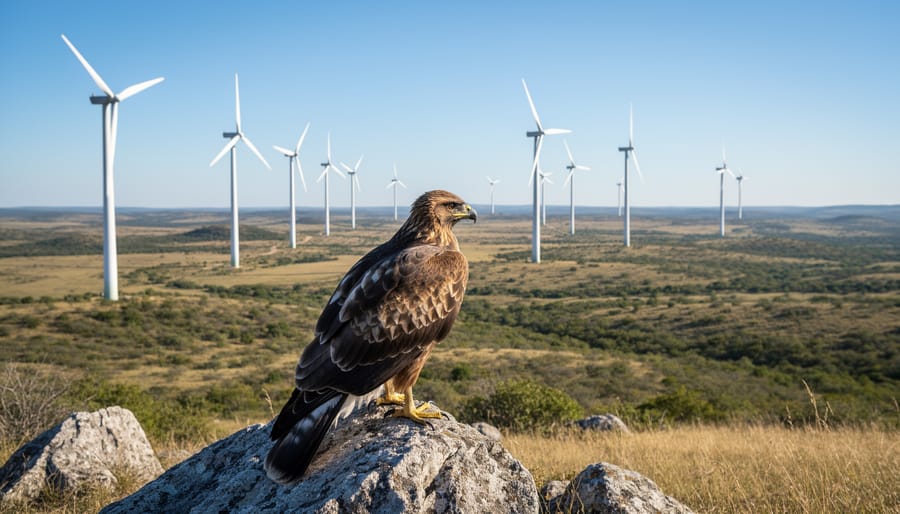
Bird populations face the most visible and well-documented impacts from wind energy installations. Collision mortality varies significantly by location and species, with estimates ranging from 140,000 to 679,000 bird deaths annually across U.S. wind facilities. However, these numbers represent a small fraction compared to other human-caused mortality sources like building strikes and domestic cats.
Raptors show particularly high vulnerability due to their hunting behavior and flight patterns. Eagles, hawks, and vultures often focus their vision downward while searching for prey, reducing their awareness of turbine blades. Red-tailed hawks and golden eagles frequently appear in mortality studies, with some California installations recording concerning fatality rates before implementing mitigation measures.
Migratory birds face heightened risks during seasonal movements, especially nocturnal migrants that may become disoriented by turbine lighting in poor weather conditions. Species traveling established flyways can encounter multiple wind farms along their routes, creating cumulative impact concerns.
Beyond direct collisions, wind farms alter available habitat and create behavioral changes. Some species avoid areas near turbines entirely, effectively losing nesting and foraging territories. Research shows displacement effects extending 100 to 800 meters from turbine bases for certain grassland birds, fragmenting previously continuous habitat and potentially affecting breeding success rates.
Bat Mortality and Barotrauma
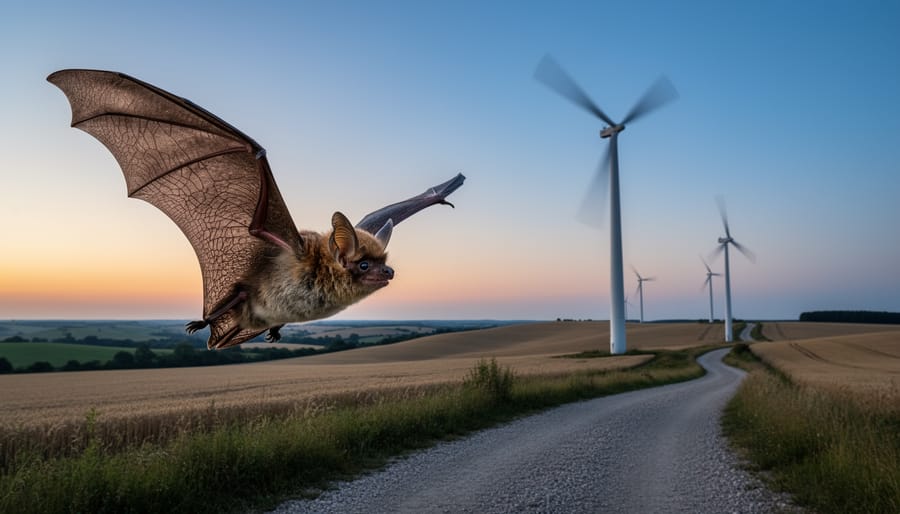
Bats experience mortality at wind turbines through two distinct mechanisms, making them particularly vulnerable compared to birds. Direct collisions with turbine blades account for some deaths, but a significant portion occurs through barotrauma, internal injuries caused by rapid pressure changes in the low-pressure zones immediately behind moving blades. This sudden drop in air pressure causes fatal lung damage and internal hemorrhaging without any physical strike.
The impact on bat populations is disproportionately severe because bats reproduce slowly, typically producing just one or two pups per year. Species like hoary bats, eastern red bats, and Mexican free-tailed bats face the highest mortality rates, particularly during late-summer and autumn migration periods when fatalities spike dramatically.
The ecological consequences extend beyond individual bat deaths. Bats consume enormous quantities of agricultural pests and forest insects, a single bat can eat thousands of mosquitoes nightly. Population declines disrupt natural pest control, potentially increasing crop damage and disease transmission. Recent studies indicate that bat losses at wind facilities in North America may number in the hundreds of thousands annually, raising urgent concerns about long-term population viability for already-threatened species facing additional pressures from white-nose syndrome.
Ground-Dwelling and Marine Wildlife Effects
Wind energy’s reach extends beyond airborne species to animals living on land and in the sea. Terrestrial mammals rarely suffer direct mortality from turbines, but construction activities and operational noise can alter their behavior and habitat use. Ground-dwelling species like deer, foxes, and small mammals may avoid areas near turbine bases, effectively reducing their available territory. During construction, heavy machinery disrupts soil, vegetation, and wildlife corridors, fragmenting habitats that reptiles and amphibians depend on for breeding and shelter.
Offshore wind farms introduce a different set of challenges for marine ecosystems. Underwater noise from pile-driving during installation can temporarily displace fish populations and interfere with marine mammal echolocation and communication. Seals, porpoises, and whales sensitive to acoustic pollution may avoid areas surrounding construction zones, sometimes for months. Once operational, turbines produce continuous low-frequency vibrations that travel through water and substrate, though evidence suggests many species acclimate over time.
The turbine foundations themselves create artificial reef structures that attract certain fish species and invertebrates, changing local biodiversity. While this can benefit some populations, it may disadvantage others adapted to natural sandy or muddy seabeds. Electromagnetic fields from subsea cables also raise concerns for species using magnetic navigation, though impacts remain under study.
Real-World Wildlife Impact: Case Studies
The Altamont Pass Wind Resource Area in California stands as one of the most studied examples of wind energy’s wildlife impact. Between the early 1980s and mid-2000s, this installation killed an estimated 4,700 birds annually, including numerous golden eagles and red-tailed hawks. The region’s terrain created natural updrafts that attracted raptors hunting ground squirrels, the same conditions that made it ideal for wind generation. By 2015, operators had replaced older, smaller turbines with fewer, larger models positioned away from prime raptor habitat. This turbine repowering reduced bird fatalities by 65%, demonstrating how technological upgrades and strategic placement can dramatically improve outcomes.
The Wolfe Island Wind Project in Ontario provides a contrasting example of proactive planning. Pre-construction surveys identified the island as a critical migration corridor for several bird species. Developers implemented seasonal curtailment protocols, shutting down specific turbines during peak migration periods in spring and fall. Post-construction monitoring through 2024 showed collision rates 40% lower than initially modeled, with targeted shutdowns preventing an estimated 200 bird deaths annually while reducing energy output by less than 2%.
Offshore wind farms present different challenges and solutions. The Horns Rev facility off Denmark’s coast raised concerns about harbor porpoise displacement during pile-driving construction. Operators used “bubble curtains”, walls of air bubbles that dampen underwater noise, and timed construction to avoid breeding seasons. Acoustic monitoring confirmed porpoises returned to pre-construction population levels within two years of completion.
Not all cases show successful mitigation. The Smøla wind farm in Norway continues to record concerning white-tailed eagle fatalities despite multiple intervention attempts. Between 2005 and 2022, the facility killed at least 72 eagles, prompting researchers to test radar-triggered turbine shutdowns and visual deterrents. Results remain mixed, with mortality rates declining only modestly. This ongoing challenge highlights that some locations and species combinations resist simple solutions, requiring either fundamental operational changes or site abandonment to protect critically threatened populations.
How Wind Projects Assess and Manage Wildlife Risks
Site Selection and Technology Solutions
Strategic site selection forms the foundation of wildlife-friendly wind development. Developers now use advanced radar tracking and acoustic monitoring during multi-year pre-construction surveys to identify migration corridors, breeding grounds, and high-risk areas. Projects avoid placing turbines directly in known flight paths of endangered raptors or along major bat migration routes. Offshore wind farms map marine mammal movements and seabird colonies to position arrays where conflicts are minimized.
Turbine design has evolved specifically to reduce wildlife casualties. Slower-rotating blades with higher visibility markings help birds detect and avoid strikes. Removing lattice towers in favor of tubular monopoles eliminates perching spots that attract raptors into the rotor zone. Painted blade patterns and UV-reflective coatings improve turbine visibility to species with different visual ranges.
Detection and deterrent technologies provide real-time protection. Camera-based systems coupled with AI can identify approaching eagles or vultures and trigger automatic turbine shutdown within seconds. Acoustic deterrents emit sounds that discourage bats from entering the rotor sweep without affecting other wildlife. Some installations use trained observers during peak migration periods to manually curtail operations when bird activity spikes.
Lighting modifications also matter. Synchronized flashing rather than constant illumination reduces attraction of nocturnal migrants, cutting collision risk while maintaining aviation safety requirements. These combined approaches transform wind sites from potential ecological hazards into carefully managed installations.
Mitigation Strategies in Practice
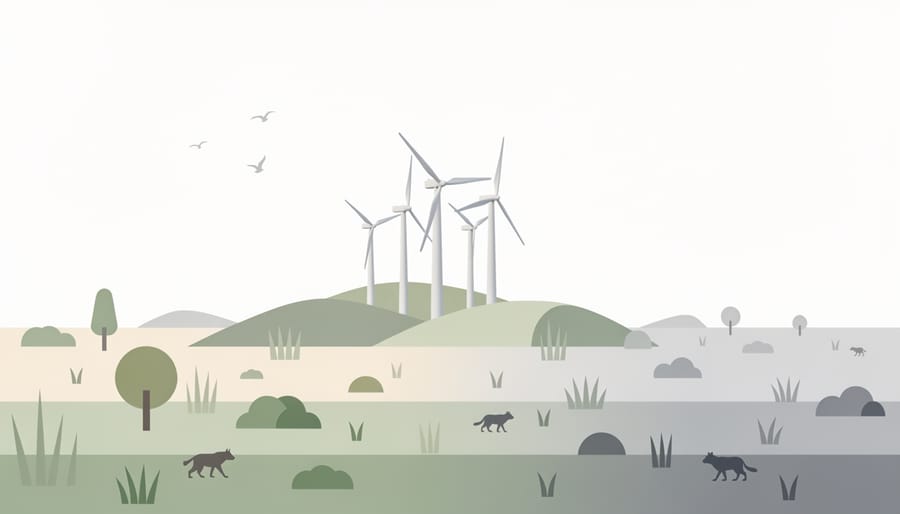
Wind farm operators use several proven strategies to reduce wildlife harm during daily operations. Curtailment programs shut down turbines or adjust blade speeds during high-risk periods, typically at night when bat activity peaks, or during seasonal bird migration windows. Studies show curtailment can reduce bat fatalities by 50-90% with minimal energy loss, making it one of the most cost-effective protection measures available.
Habitat restoration offsets compensate for land disturbance by creating or enhancing wildlife habitat elsewhere. Projects might restore native grasslands for ground-nesting birds, establish protected corridors around migration routes, or preserve roosting sites for bat colonies. These offsets aim to achieve “no net loss” of habitat quality, ensuring local ecosystems maintain their carrying capacity despite development.
Operational adjustments include temporary shutdowns during extreme weather events that disorient migrating birds, or feathering turbine blades (angling them to reduce rotation) when radar systems detect approaching flocks. Some facilities employ trained observers who can trigger emergency shutdowns when endangered species enter the area.
Conservation partnerships extend protection beyond the wind farm boundary. Operators often fund research into species behavior, support population monitoring programs, and collaborate with wildlife agencies to develop regional conservation plans. These multi-year commitments help offset individual project impacts while advancing broader understanding of human-wildlife coexistence in renewable energy landscapes.
Comparing Wind Energy to Other Energy Sources
When evaluating wind energy’s impact on wildlife, context matters. Every energy source carries ecological costs, but the scale and nature of those costs vary dramatically. Wind turbines do cause bird and bat deaths, yet the mortality numbers pale in comparison to the devastation wrought by fossil fuel extraction, air pollution, and climate change itself.
Coal-fired power plants kill millions of birds annually through toxic emissions, mercury contamination, and habitat destruction from mining operations. Oil and gas infrastructure fragments ecosystems across vast territories, while catastrophic spills poison waterways and coastlines for decades. Nuclear power, though lower in direct wildlife mortality, produces radioactive waste requiring secure containment for thousands of years and carries the risk of ecological disasters that render entire regions uninhabitable.
| Energy Source | Annual Bird Deaths (per GWh) | Habitat Impact Severity |
|---|---|---|
| Wind | 0.3-0.4 | Low, Moderate (localized) |
| Solar | 0.2-0.3 | Low (desert habitats) |
| Coal | 5.2-7.9 | Extreme (mining, emissions) |
| Natural Gas | 0.9-1.3 | High (extraction, infrastructure) |
| Nuclear | 0.4-0.6 | Moderate (waste, disaster risk) |
Solar energy presents a closer comparison, with concentrated solar facilities posing some risk to birds but generally lower collision rates than wind. Ground-mounted solar arrays disrupt desert habitats and affect reptile populations, though impacts remain geographically contained. Both renewables share a critical advantage: they don’t emit greenhouse gases that accelerate ecosystem collapse worldwide.
The climate crisis represents the single greatest threat to global biodiversity. Rising temperatures, altered precipitation patterns, and habitat loss from extreme weather dwarf the localized impacts of any individual wind farm. Research consistently shows that transitioning to renewable energy, including wind, provides a net positive outcome for wildlife by slowing the pace of climate-driven extinction.
Modern wind energy innovations continue narrowing the gap between energy production and conservation. Taller turbines with slower blade speeds, AI-powered detection systems, and strategic placement protocols reduce mortality rates year over year. When developers prioritize wildlife-friendly sites and operational adjustments, wind power delivers clean energy with minimal ecological footprint compared to the devastating legacy of fossil fuels that still dominate the global energy mix.
How The Environmental Impact of Wind Energy on Works
Understanding how wind energy affects wildlife starts with examining the physical and spatial relationships between turbines and animal populations. Wind farms occupy territory that wildlife previously used, creating new structures in flight paths, migration corridors, and foraging areas. The impact mechanism follows a predictable sequence: turbines rotate at speeds up to 180 mph at blade tips, creating invisible hazards that birds and bats encounter during their normal activities.
The collision risk increases when wildlife cannot detect or avoid the spinning blades. Birds rely on visual cues, but turbine motion blur and low-contrast designs make blades difficult to perceive, especially during poor weather or low light. Bats face additional danger from pressure changes near turbines, rapid air pressure drops behind blades cause internal injuries even without direct contact, a phenomenon called barotrauma that ruptures lung tissue.
Beyond immediate collisions, wind farms create what scientists call a “landscape of fear.” Animals detect turbine noise, vibration, and visual disruption from considerable distances, prompting them to abandon suitable habitat. Ground-nesting birds avoid areas within 500 meters of turbines, while certain bat species alter their foraging routes entirely. This displacement compounds when multiple wind projects fragment larger ecosystems.
The severity of these mechanisms varies by location, species, and turbine configuration. Offshore installations affect different species than mountain ridge placements. Understanding this mechanical process helps developers predict risks and design interventions that reduce harm without compromising the broader climate benefits of renewables vs fossil fuels.
Frequently Asked Questions
Is wind energy worse for wildlife than fossil fuels?
No. While wind turbines do cause some wildlife deaths, fossil fuel extraction, combustion, and climate change kill vastly more animals through habitat destruction, pollution, and extreme weather events. Wind energy’s wildlife impact is manageable and significantly lower when proper mitigation is used.
Can wind farms operate without harming bats and birds?
Complete elimination isn’t realistic, but modern wind projects dramatically reduce harm through strategic placement, seasonal curtailment during migration periods, and detection systems that shut down turbines when wildlife approaches. Well-managed sites show mortality reductions of 50-80% compared to older installations.
Do offshore wind farms affect marine life differently than land-based turbines?
Yes. Offshore installations create underwater noise during construction and operation that can disrupt marine mammals and fish, but the turbine foundations often function as artificial reefs that attract sea life. Proper timing of construction activities and energy storage integration help minimize negative impacts while maintaining power reliability.
What should I look for in a wind developer’s environmental commitment?
Check whether they conduct multi-year pre-construction wildlife surveys, publish mortality monitoring data, use certified wildlife-friendly turbine placements, and fund habitat restoration or conservation offsets. Transparency about their environmental assessments indicates serious stewardship.
These questions reflect common concerns that arise after understanding wind energy’s wildlife impacts. The technology continues improving, with newer projects incorporating lessons from decades of field research to balance clean energy generation with ecological responsibility.
Wind energy’s environmental impact on wildlife represents a real but manageable challenge within the larger fight against climate change. While bird and bat collisions, habitat displacement, and behavioral disruptions demand serious attention, the renewable energy industry has demonstrated a clear commitment to understanding and reducing these effects through ongoing research and adaptive management.
The picture emerging from current science and practice is encouraging. Strategic site selection keeps turbines away from critical migration routes and sensitive habitats. Detection systems and seasonal curtailment protect vulnerable species during high-risk periods. Habitat restoration offsets and collaborative monitoring programs address ecological concerns while allowing clean energy expansion. These aren’t theoretical solutions, they’re working measures deployed across thousands of installations worldwide.
Context matters profoundly here. Compared to the wholesale habitat destruction from fossil fuel extraction, the air pollution killing countless birds annually, and the catastrophic climate disruption threatening entire ecosystems, wind energy’s localized wildlife impacts remain modest. The transition to renewable power is itself a conservation imperative, protecting biodiversity at a planetary scale.
Looking ahead, smarter turbine designs, refined radar technology, and expanded conservation partnerships will further reduce wildlife conflicts. The path forward isn’t choosing between clean energy and wildlife protection, it’s ensuring both thrive together. With continued vigilance and innovation, wind energy stands as proof that climate solutions and ecological stewardship can advance hand in hand.